

If you’ve ever struggled with how to recognize safe people, I want you to know that it is very common for a survivor of domestic violence to struggle with discerning whether a person is safe or not. It is important to be able to recognize if a person is safe, because trusting the wrong person can lead to more harm, confusion, or even repeated abuse. Toxic people can rob you of your energy, health and healing. If you want to understand this more deeply, you can read more about it here: Unmasking How Toxic Relationships Rob You.
Trauma disrupts your ability to trust yourself and others, practice healthy boundaries, and build strong discernment. The good news is that you can learn to recognize red flags, strengthen your boundaries, and begin to trust yourself again.
Your Healing Path: See → Set → Trust
Learning to recognize safe people and build healthy relationships can feel overwhelming. But it can be broken down into three simple steps:
- See → recognize red flags and safe traits
- Set → practice healthy boundaries
- Trust → rebuild trust in yourself, with God guiding you
Why Survivors Struggle to Identify Safe People
There are several reasons why you may struggle to identify safe people, many of which you may not even be aware of.
Some of these include:
- Not being taught what red flags are, or being conditioned to ignore them
- Growing up as a people pleaser
- Learning to ignore your own needs and put others before yourself
- Growing up in an abusive environment where dysfunction felt “normal”
- Having weak or underdeveloped boundaries
As a result, people and relationships can feel confusing and difficult to navigate.
How to Recognize a Safe Person
The good news is that you can learn what safe people are like and what characteristics belong to a healthy individual.
✅ Safe People:
- Respect your “no” without pressure
- Are consistent (not hot and cold)
- Take accountability when they are wrong
- Don’t rush closeness or intimacy
- Make you feel calm, not anxious
🚨 Unsafe People (Red Flags):
- Push past your boundaries
- Guilt-trip you
- Are inconsistent
- Make you feel confused or drained
- Weaponize your vulnerability
The next time you are around someone you are trying to discern as safe or not, take a moment to tune in to how your body is feeling and reacting. Are you tense and unsettled in their presence, or do you feel peace and at ease? If you would like further support with recognizing safe people, you can download our free Is This a Safe Person checklist and reflections.
Ask the Holy Spirit to help you discern a person and to fine-tune this skill. God wants you in healthy relationships just as much as you do.
How to Practice Boundaries
Boundaries are rules you set for yourself about what you are okay with and what you are not okay with in how others treat you. They are like a fence around your life, helping you decide what you let in and what you keep out to protect your peace and well-being. Your fence is YOURS and you don’t need to feel ashamed or like you are “mean” for opening or closing your fence to others. You are allowed to decide who has access to you.
Here are examples of what boundaries sound like:
- “I’m not comfortable with that”
- “I need time to think”
- “No, I can’t do that”

After you assert your boundary to the person, pay attention to their response as it will tell you a lot about them.
A safe person respects your boundary and will honor it. An unsafe person will be pushy to dismantle that boundary, guilt-trip, ignore the boundary or may even get angry.
What happens next:
- Safe person → respects it
- Unsafe person → pushes, guilt-trips, ignores
Be mindful of your self-talk after stating your boundary. Are you beating yourself up about drawing a line? If you are, you most likely have some false beliefs about yourself and/or are not used to loving yourself in this manner.
Remember a person’s response to your boundary reveals their safety.
How to Rebuild Trust in Yourself
After going through trauma, it is very common to struggle with trusting yourself. You may second guess your thoughts, your feelings, and your decisions. This does not mean something is wrong with you. It simply means you may have learned to ignore your instincts in order to survive.
The good news is that you can rebuild trust in yourself, and it starts with small, intentional steps and decisions.
Start Small:
- Begin with simple, everyday choices
- Pay attention to what you need and what you actually want
- Trust is rebuilt in small moments, not big leaps
Notice How You Feel Around People:
- Do you feel calm or tense?
- Do you feel safe or on edge?
- Do you feel like yourself or like you’re performing?
Your feelings are giving you important information.
Don’t Override Discomfort:
- “Maybe I’m overreacting”
- “It’s not that serious”
- “I should just be nice”
Notice when you say things like the phrases above. Discomfort is not something to silence—it’s something to pay attention to.
Pause Before Saying Yes
Give yourself time to think and process. Try saying:
- Push past your boundaries
- Guilt-trip you
- Are inconsistent
- Make you feel confused or drained
- Weaponize your vulnerability
Pausing creates space for better decisions.
Reflect After Interactions
Ask yourself:
- Did I feel safe or uneasy?
- Did I feel respected?
- Did I feel drained or at peace?

Don’t overthink—just notice patterns.
Truth to Hold On To
Your body often recognizes what your mind hasn’t processed yet. Even if you can’t explain it, it is okay to trust what you feel.
Rebuilding trust in yourself is a process, and it may feel uncomfortable at first. But as you continue to listen to yourself and honor what you feel, it will become easier. You can learn to trust yourself again.
What Will try TO stop you
If you are not familiar or used to implementing boundaries in your life, you may feel uncomfortable at first. You may feel like you are being mean or selfish. People in your life may push back on your boundaries and pressure you to stop using them all together. Remember that change is uncomfortable and creating a new normal takes time and patience with yourself.
Keep pushing through the hard feelings and any pushback from family or friends.The people who benefited from your lack of boundaries may struggle when you start setting them.
Boundaries may feel uncomfortable, but they are not wrong.
how to become a safe person
I want to take a moment to teach you how to become a safe person, not just recognize one. Why? Because as you become safer, you begin to recognize safety more clearly. Essentially, you are becoming what you are also looking for.
To become a safer and healthier person, you need to:
- Respect other people’s boundaries
- Be consistent
- Listen without judgment
- Take accountability
- Not control or pressure others
Healthy people attract healthy people.
As you begin to grow in these areas, you will not only recognize safe people more easily, but you will also create safer and more meaningful relationships in your life.
what safe relationships feel like
We all want safe relationships in our lives—relationships that build us up and support us, rather than tear us down and wither our self-esteem.
If you have experienced domestic violence, you may feel like you do not know what a safe relationship feels like, because feeling unsafe has been your norm for far too long.
A safe relationship will bring about feelings such as:
- Peace
- Emotional safety
- Trust
- Openness
- Mutual respect
While an unsafe relationship may make you feel:
- Confused
- Anxious
- Like you’re walking on eggshells
- Angry
- Unseen and discarded
- Hypervigilant
No relationship is perfect, and even healthy relationships will go through seasons where individuals need to address unhealthy behaviors. But a healthy relationship is built on a foundation of love and respect, even through challenges.
You deserve to experience relationships that feel safe, steady, and rooted in respect.
The power of a safe place
Recently, my son, who is 3, was upset and struggling to express, communicate, and process his feelings. He was holding his emotions in. His face was angry, and he was starting to lash out. I hugged him and gently encouraged him to tell me what was bothering him. He started to cry and fell into my embrace. In that moment, he released and opened up about why he was so distraught.
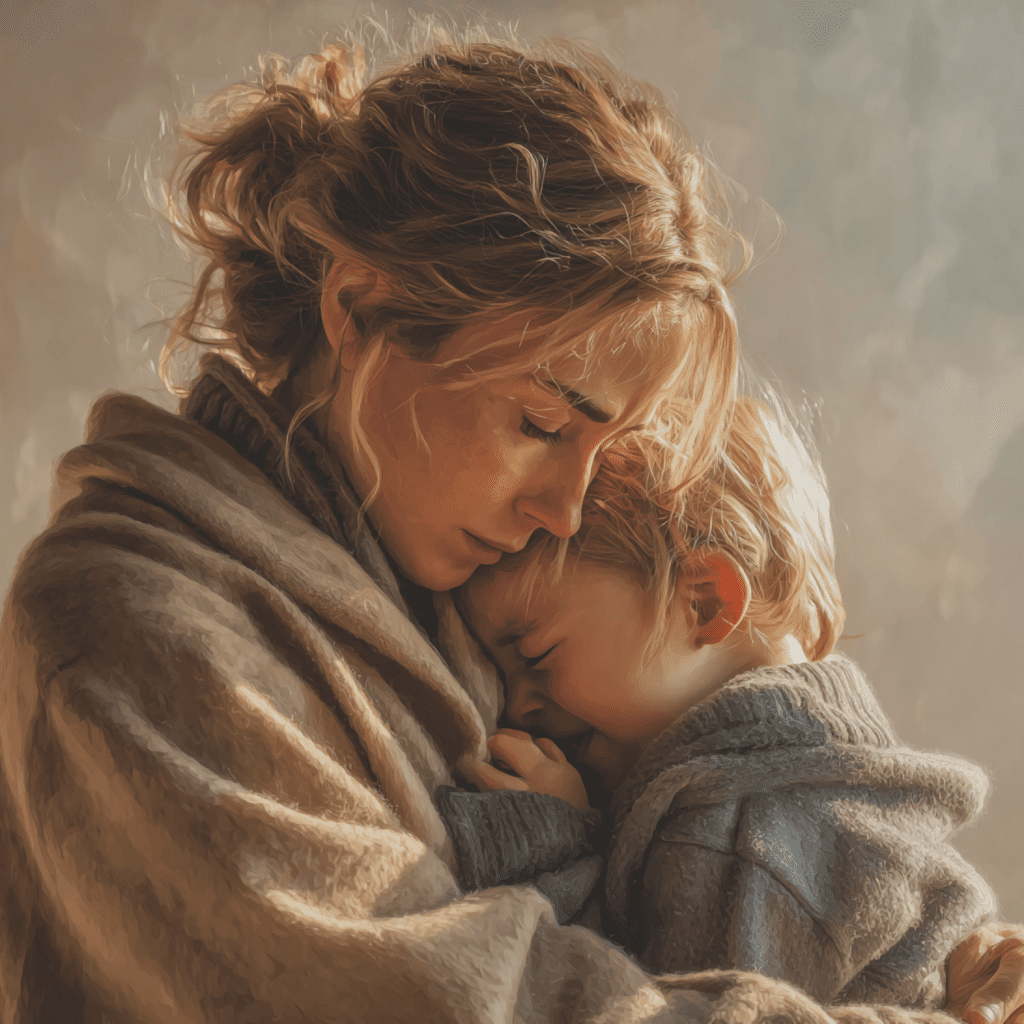
In that moment, I realized how powerful a safe person and a safe place, can be. When my son felt safe and supported, it allowed him to let his guard down and open up his heart.
A safe person creates space for vulnerability and connection, which we all need, because God created us for community. Above all, God is our number one safe place when we need to release and open up our hearts.
If you would like to join our safe place and heal in community, you can join our private Facebook group here (please answer all 3 questions and approve the group rules to be accepted).
We all need safe places—and God is the safest place we will ever have.
god is our foundation of safety
Psalm 91 paints a comforting picture of God as our safe place and refuge:
“He who dwells in the shelter of the Most High will remain secure and rest in the shadow of the Almighty… He is my refuge and my fortress… And under His wings you will find refuge; His faithfulness is a shield and a wall.”
Psalm 91:1–2, 4
God assures us that He is a secure place of rest, where we are covered under His wings of protection.
The names of God also reveal His safe and secure nature. One of His names, El Roi, means “The God Who Sees Me.” The God of the universe sees you fully, inside and out, and desires intimacy with you. He wants to be your safe place and a shoulder to rest on.
Another name of God is Jehovah Shammah, which means “The Lord Is There.” Our God is consistent, always present, never leaving you stranded or alone.
How comforting it is to serve a God who models consistency, safety, and trust. He shows us what safe love looks and feels like.
Before you learn to trust others, you can rest in the safety of a God who has always been trustworthy.
Moving Forward with Confidence
Learning how to recognize safe people is a process. It requires unlearning what you had to do to survive and learning new ways to protect, honor, and trust yourself again.
You are not broken for struggling with this. You were shaped by your experiences, but you are capable of growing beyond them.
As you begin to practice boundaries, pay attention to how people respond, and become more aware of how you feel, things will start to become clearer. What once felt confusing will begin to make sense.
You will begin to recognize safe people.
And just as importantly, you will become one.
Give yourself grace in this process. It may feel uncomfortable at first, but that does not mean you are doing something wrong—it means you are doing something different.
You deserve relationships that feel safe, steady, and rooted in respect.
And through it all, remember that God is your foundation of safety. He sees you, He is with you, and He is guiding you every step of the way.
He is Faithful,


